This month’s blog is written by Dorine, a psychology graduate and counsellor in Burundi. She attended Network for Africa’s trauma counselling training in 2025, and this September she came back to help teach it.
I have always wanted to understand people: how they function, their wounds, their emotions and their relationships. I wanted to understand where trauma comes from and, above all, how I can help people to recover from it. However, after university, where we had only studied theory, I felt stuck. I came to the training last year with Network for Africa and AVODES hoping for something practical, and that is what I found: skills like listening and relaxation exercises that I can really use to help people.
The training also changed how I understand trauma. I used to think of it as something that simply happens, but now I know that it can affect our relationships, how we feel and act, how we live with others, and even our work. This training also taught me to look after myself. Sometimes you think you are only there to help others, but what about me? Am I safe, am I OK? Now I know how important it is to have a plan to take care of myself and to rest.
Before the training I helped people in an unofficial way, because I was afraid of starting something by myself. Afterwards, I saw how much people need help. I realised that I could listen to people in a safe place, and it took courage to go out and find somewhere I could welcome my clients.
It hasn’t been easy, because some people feel they might be seen as foolish for seeking help. The biggest challenge is money – I work with some young people who don’t always have money, but I tell them to come anyway. Some clients also expect me to have all the solutions to their problems, which is a challenge in itself, but this has pushed me to look for other training courses so that I can help more, and it is why coming back to Network for Africa for further training is so helpful.
Many of the young people I meet struggle with self-esteem, due to things like having grown up without one of their parents, or a parent who wasn’t supportive. I’ve found that this can push them towards thoughts of suicide. One girl told me she had gone three years without attending school, as she felt she wasn’t capable. But now she says “I know who I am, I have my own values, I can do things by myself, and I can finish my studies.” Another young man, who had thoughts of suicide because of problems with his parents, has abandoned those plans and is now trying to talk with them and to forgive them.
The people I have helped go back into their communities and tell others about it, which shows me that what I am doing is helping. When people ask me how I find clients, my only answer is that if you help someone, they will tell someone else. Go with your heart to help, and they will share. This is also why peer counselling works well here. When you say “I’m a psychologist”, some people feel they are being analysed, but being supported by someone from their own community feels different. I sometimes receive referrals for clients who were first listened to by someone who isn’t a psychologist themselves.
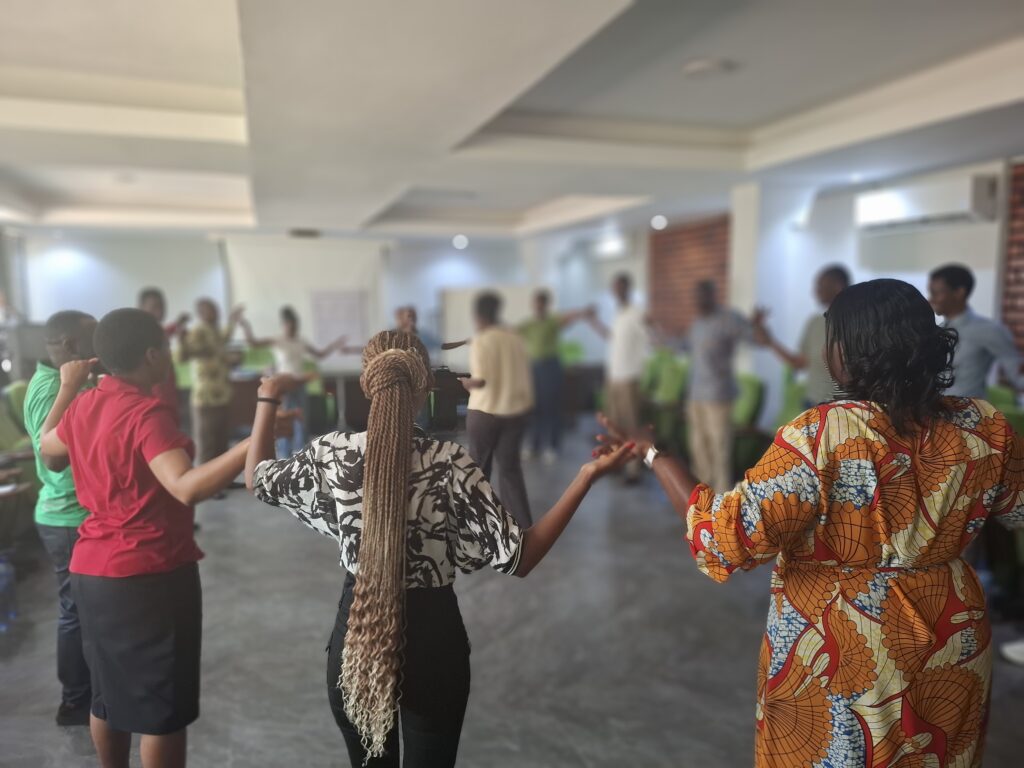
This September I was invited to come back and help teach the training to new participants alongside Shelly [Dr Shelly Evans, Network for Africa’s volunteer psychotherapist]. I was happy and grateful but also scared. A year earlier I had been a participant, and I wondered whether I could give these people what they need. I came and did it anyway, and it helped me to learn too. I had not expected people to respond to me, so it was a surprise to see them sharing and appreciating the teaching, and it was encouraging to see Shelly, whom I respect and who is a very patient teacher, sitting and listening with everyone else.
If you are reading this in the UK, US or elsewhere, you might know that we need tools and skills, but first I want you to know that we have people here in Burundi who are willing to do this work. We have a voice inside us telling us to go into our communities and do something to support others who are struggling. The people trained here go back to their communities and help others without waiting for anything else. The training creates a chain of change.
For myself, I want to keep learning, even if it’s through small online training courses, and I want to reach many more young people. I hope to meet others who share this passion and to keep training each other, as we do through AVODES with our local team of volunteers, because alone I might help five people, but together we can help many more.
If you’d like to help more people like Dorine train and support their communities, please visit our donation page.