It was once thought that people suffered extreme poverty because they lived in “under-developed” countries. But the World Bank (which studies these things) now believes the most crucial factor is whether or not civilians are in a conflict zone.
It is not surprising that if someone survives a war, and they are poor, they may also struggle with depression, anxiety or post-traumatic stress. If you wonder why Network for Africa and its partners support mental health work in Rwanda (genocide), Sierra Leone (civil war), Uganda (civil war), and Burundi (both), it is due to the legacy of violence, and not “under-development”.
Some governments in wealthier countries are rethinking the impact of their own support, asking how much real development it creates. The argument goes that millions of people in China and India, for example, have been lifted out of poverty this century by economic growth, not development aid. (It helped that neither country has had a major war on its own soil in recent years).
Network for Africa focuses on helping survivors of conflict to manage their traumatic memories to the point where they are able to begin planning for the future. Having a future means earning enough money to escape the extreme poverty in which many of them are trapped.
How “poor” is poor?
Our Ugandan partner BNUU surveyed members of 14 of our community self-help groups for survivors of conflict in Agago District, northern Uganda. We found that the households surveyed were getting by on an average of £4.59 ($6.18) a week between them. That is just £0.72 ($0.97) per person per week, or about £37 ($50) a year. Yet national census data show that the typical Ugandan earns £572 ($770) a year. That’s the difference between living in a conflict-affected rural community and a peaceful urban one.
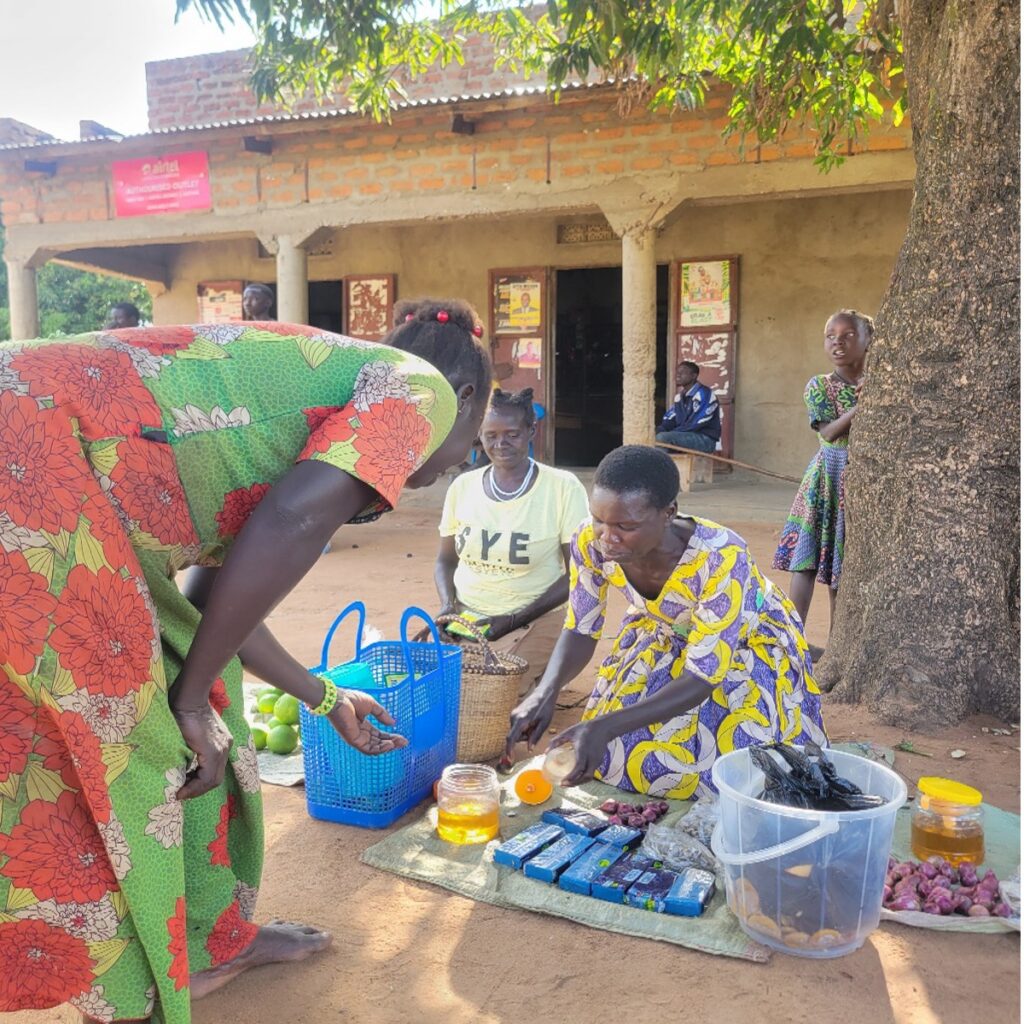
For this reason, we work with our local partners to train survivors of conflict to start and run small businesses that will boost their family’s income. Group members are encouraged to think about their own skills and experience, what local people want to buy, and who else is already selling it. Most choose to sell household goods such as soap, sugar, salt, cooking oil or tea. Some produce baked goods and sweets to sell.
Group members also learn how to manage money, to help them run and grow their businesses. The training covers household budgeting, making financial decisions, setting priorities and keeping accounts. Most had never had any training in managing money before, and we are pleased that afterwards they understood much more about handling their finances.
BNUU also helps the self-help groups to set up their own savings and loans schemes as a first step to starting small businesses. Members pool their savings and can borrow from the group, which gives them practical experience of saving and borrowing, and shows them why repaying loans and keeping accurate records matter.
Groups are supported to grow vegetables like okra and aubergines, given seeds to plant, and put in touch with local farming advisers. As well as feeding their families, the vegetables bring in extra money: after four months some members were paying money from their vegetable sales into their group savings every week.
The results
A year on, the difference is striking. When BNUU repeated the survey 12 months later, the average household’s weekly income had more than quadrupled, from £4.59 ($6.18) to £18.71 ($25.19). Women and men saw similar gains.
Group members are saving more, too. Together, the 14 groups saved more than £2,700 ($3,635), and lent money to members to invest in farming and their businesses, pay school fees and buy medication. And nine in ten members have expanded their businesses beyond the goods they started with, into activities such as growing crops or keeping animals.
The changes go beyond money. Before the project, six in ten members had gone hungry on at least one day in the previous week. A year later, despite more frequent droughts, that had fallen to around a third. Fewer than one in ten felt able to meet their own basic needs at the start; now eight in ten do. Almost a third were in severe mental distress; now just one in a hundred is. And more than eight in ten now feel hopeful about the future, up from fewer than one in five.
One group member’s story
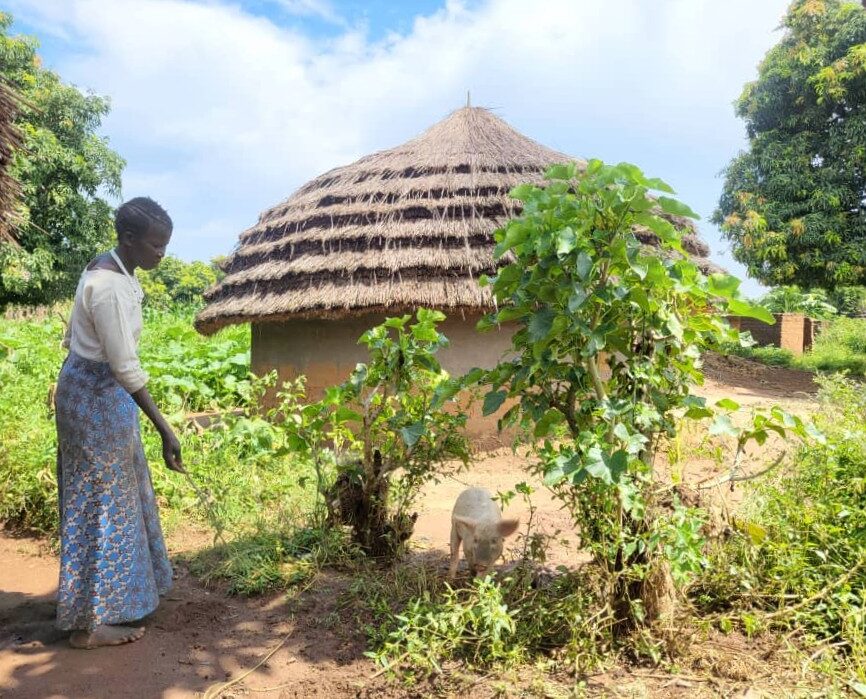
One carer in the Tam Pi Wa self-help group was given 20 litres of cooking oil and a box of soap by BNUU to start a business. She put the profits into her farm, and after a good harvest she sold her sesame and sunflower crops for about £43 ($58). With part of that money she bought a pig, which she hopes will have piglets next year. She has since started selling cassava and green vegetables too, and her stock sells so quickly that she restocks every day.
I want to demonstrate to my community that I am able to be productive just like them.
Thank you for helping us to provide this training. Please click here to support us to continue this vital work.